
Barrington Community Unit School District 220
Barrington Community Unit School District 220 serves students from kindergarten through eighth grade in a vibrant and engaged community that values wellness, learning, and student success. When Quest partnered with the district, the shared vision was clear: to elevate this On-Program (NSLP) school dining program by moving away from prepackaged meals toward fresh, scratch prepared food that students would love and parents could trust.
Through hands-on training, new equipment investments, and a commitment to continuous improvement, Quest worked side-by-side with district leaders to build a program rooted in quality, nutrition, and excitement for school meals.
The Problem
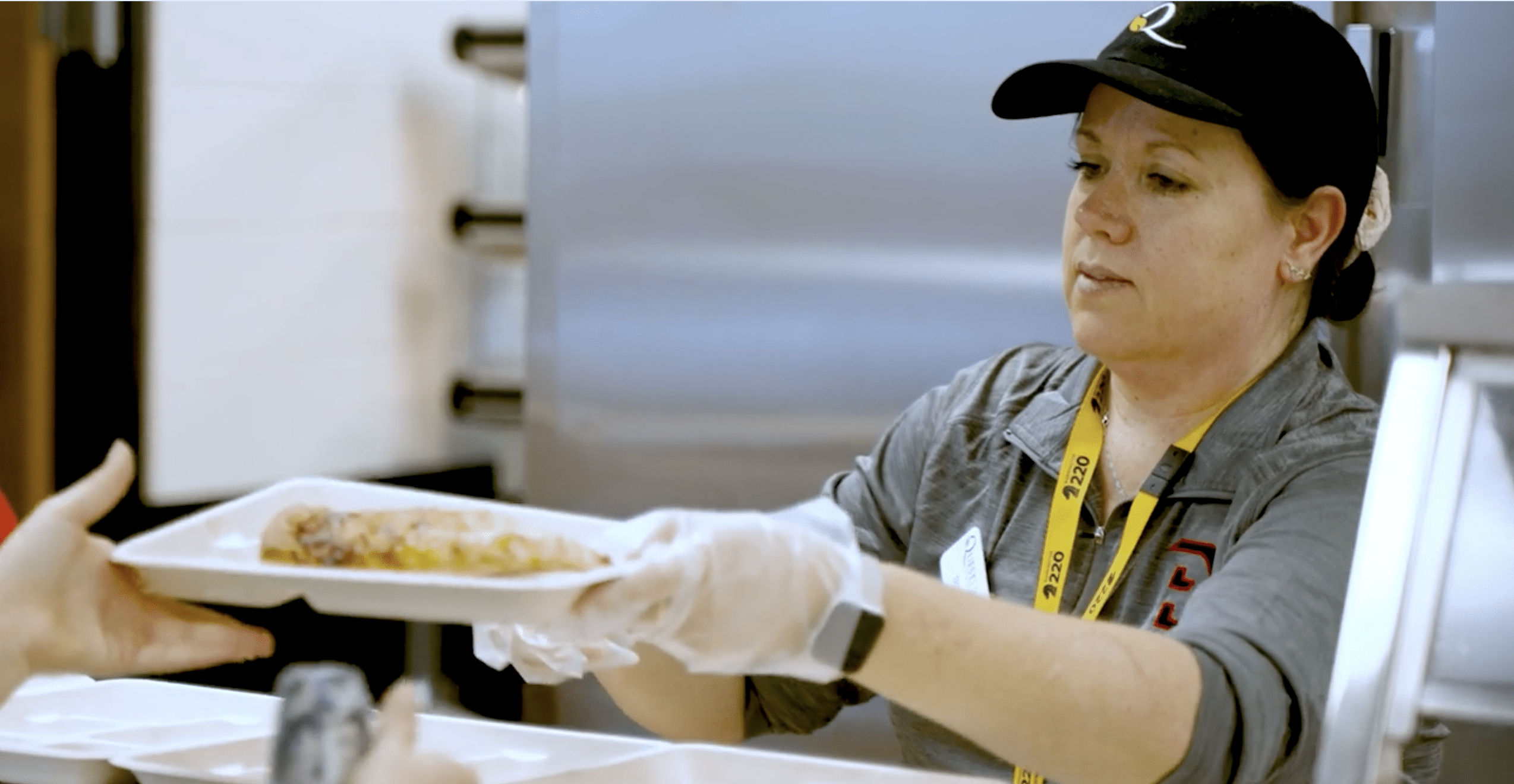
Before Quest arrived, the district’s food service program relied heavily on heat and serve meals that offered little variety or freshness. The experience was convenient but uninspiring, and the dining program lacked the homemade quality and engagement that could make mealtime a highlight of the school day. Quest identified several challenges early on:
- Limited Scratch Cooking – The existing staff had limited experience with cooking from raw ingredients.
- Training Needs – The team required coaching and confidence to shift from reheating meals to preparing fresh food daily.
- Equipment Gaps – Some kitchens needed updates to support scratch cooking, particularly for items like grilled sandwiches and breakfast entrées.
- Low Breakfast Participation – The breakfast program offered mostly prepackaged items, with few options that excited students or encouraged daily participation in this important meal.
Quest’s goal was to build a program that felt authentic, nutritious, and fun, inspiring students to take pride in what was served in their cafeteria.
Quest’s Solution
Quest focused on three main areas to transform Barrington’s dining program: building culinary skill, expanding fresh offerings, and engaging students through feedback and creativity.
Building Culinary Skill and Scratch Cooking
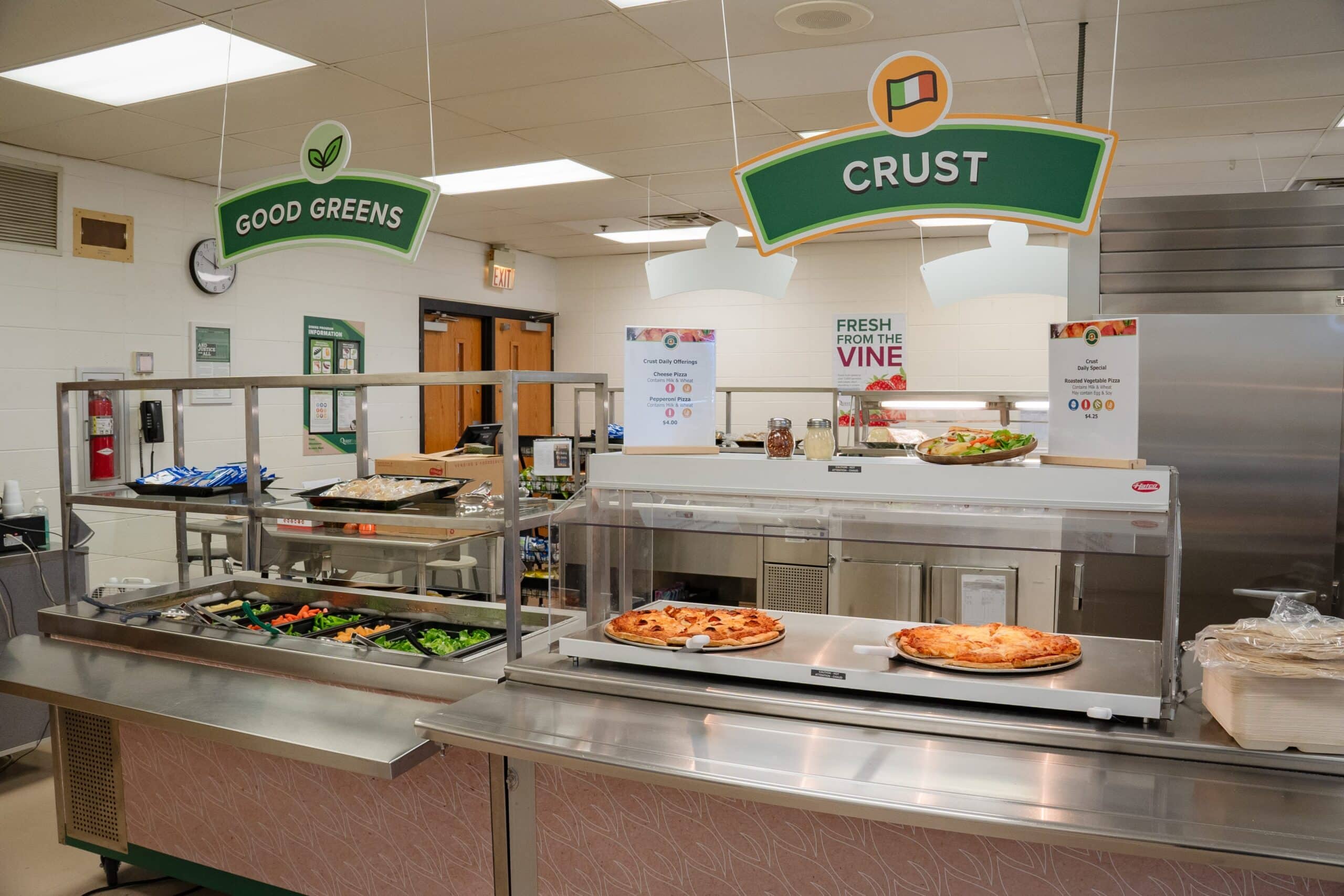
Quest began by providing hands-on training for the existing team, teaching proper cooking techniques, recipe execution, and presentation. The first major success came when every school began making pizza from scratch, a big step forward in food quality and team pride.
One elementary student captured the excitement perfectly, saying, “Look guys, it’s not square pizza, it looks just like Costco pizza.” That moment reflected how visibly different and appealing the food had become.
As the program deepened its commitment to scratch cooking, Quest collaborated with the district to make key equipment upgrades, including the addition of flat top grills. These tools now allow teams to prepare grilled cheese, quesadillas, and French toast with much better texture and flavor than what could be achieved in ovens.
Fresh Fruit and Vegetable Bars
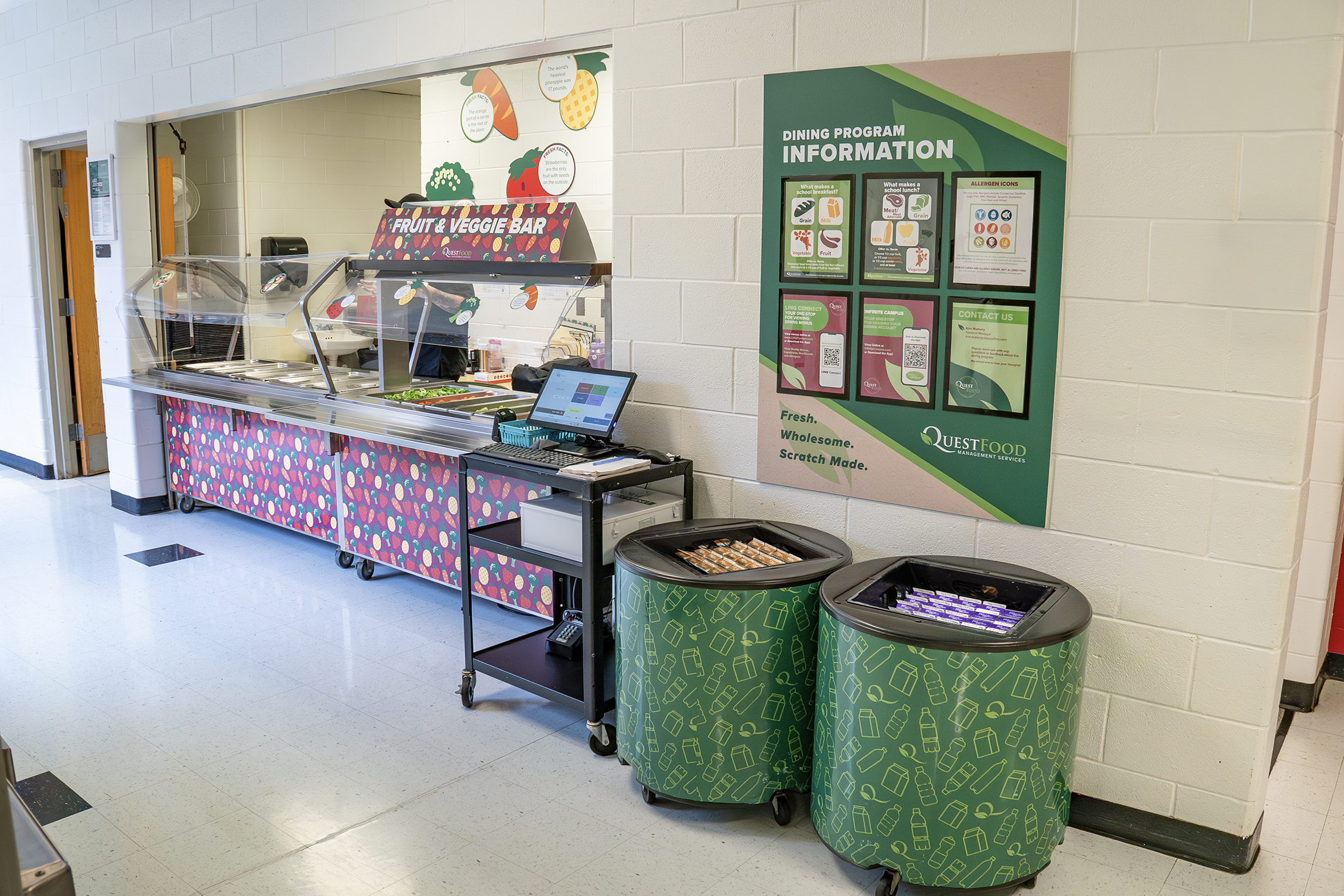
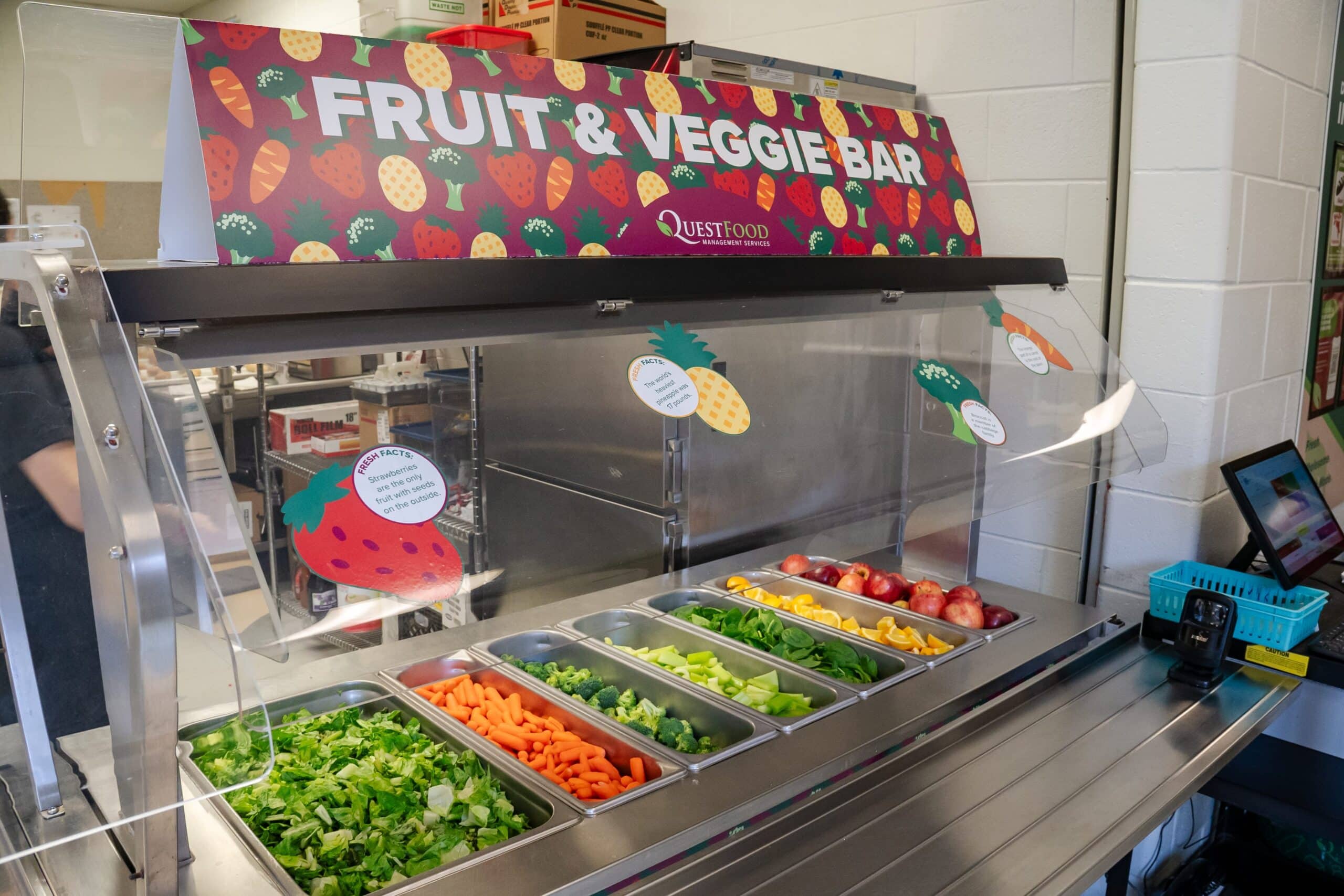
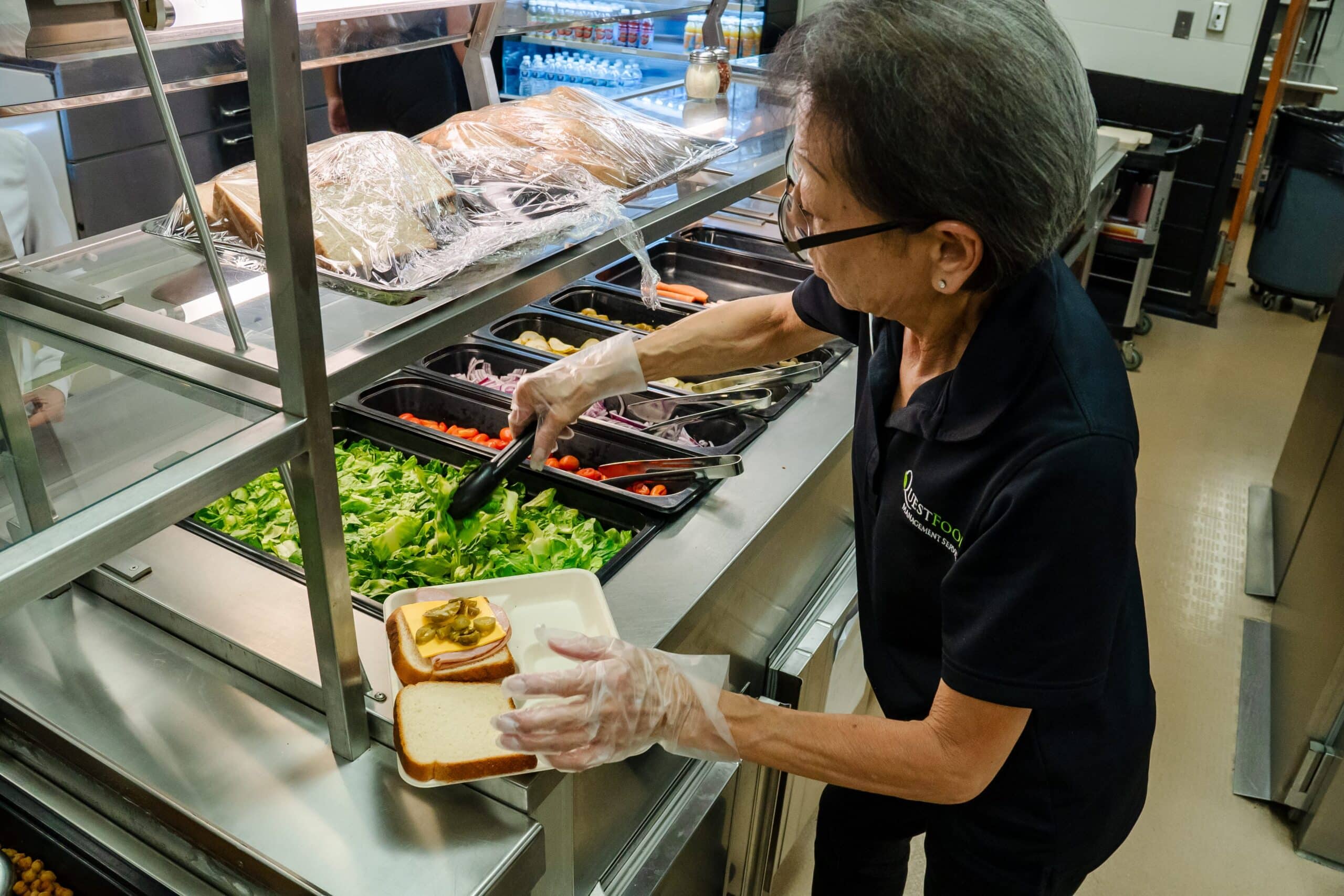
Quest introduced colorful fruit and vegetable bars at each school, emphasizing variety and nutrition. The bars showcase an ever changing mix of options such as jicama, plums, pears, edamame, and roasted chickpeas, encouraging students to try something new every day.
Students are invited to pick at least one new item from the bar, creating daily opportunities to explore new tastes and learn about healthy choices in a fun and approachable way.
Revitalizing the Breakfast Program
Breakfast saw the most dramatic transformation. Previously, students were served prepackaged items such as muffins and bagels. Quest replaced this with a menu of rotating, freshly made entrées, including breakfast sandwiches, breakfast tacos, fruit and yogurt parfaits, pancakes, and French toast.
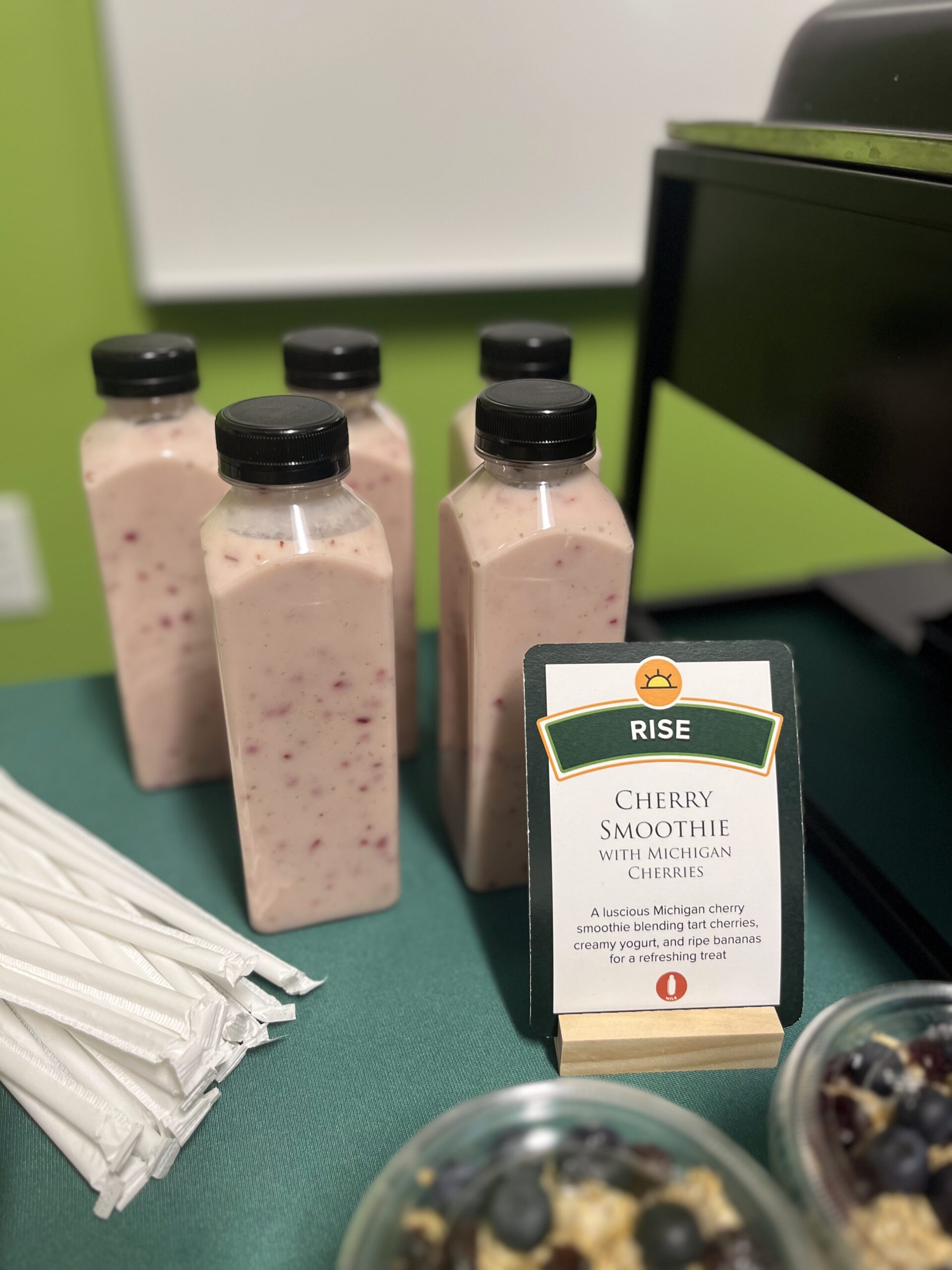
The team also introduced smoothie Fridays, featuring house made fruit smoothies that quickly became a student favorite. On a typical day, about 300 students eat breakfast, but on smoothie days participation jumps to 400 students, an increase of more than 30 percent.
Continuous Feedback and Engagement
Quest built structured feedback channels to ensure the program stayed student focused and responsive. Each middle school now hosts two food committee meetings per year, allowing students to sample new items and share ideas.
In addition, three schools feature feedback kiosks for students to rate their meals in real time, while Quest team members attend events such as Meet the Teacher, Back to School Night, and Parent Teacher Organization gatherings to meet families, gather input, and share information.
This ongoing dialogue keeps students engaged, staff informed, and the program continually improving.
The Result
The improvements in food quality, menu variety, and student engagement have produced measurable and meaningful results.
Stronger Connection to the Community
Quest’s presence at community events and collaboration with district leaders on programs such as waste management has strengthened trust and engagement. Families see that the dining program is not only focused on meeting nutritional standards but also on creating educational and memorable experiences for students.

The Barrington Community Unit School District 220 dining program demonstrates the powerful impact of scratch cooking and student engagement in school food service. Through training, innovation, and collaboration, Quest transformed a heat and serve model into a dynamic, student centered program that reflects the district’s values of wellness and excellence.
Key outcomes include:
- All schools now preparing scratch made meals, including pizza.
- Introduction of colorful fresh fruit and vegetable bars.
- Breakfast participation up by 81 percent, with smoothie Fridays driving excitement.
- Total meal participation up 17 percent since transitioning to Quest.
- Strong community partnerships supported by active feedback and engagement.
Looking ahead, Quest and Barrington CUSD 220 plan to continue expanding menu variety, gathering student feedback, and introducing new seasonal promotions. With a shared commitment to quality and creativity, the program continues to grow and ensures every student has access to meals that are fresh, delicious, and made with care.